SOLAR-CONTROL WINDOW FILM · SIOUX CITY
Keep the daylight.
Dial back
the glare.
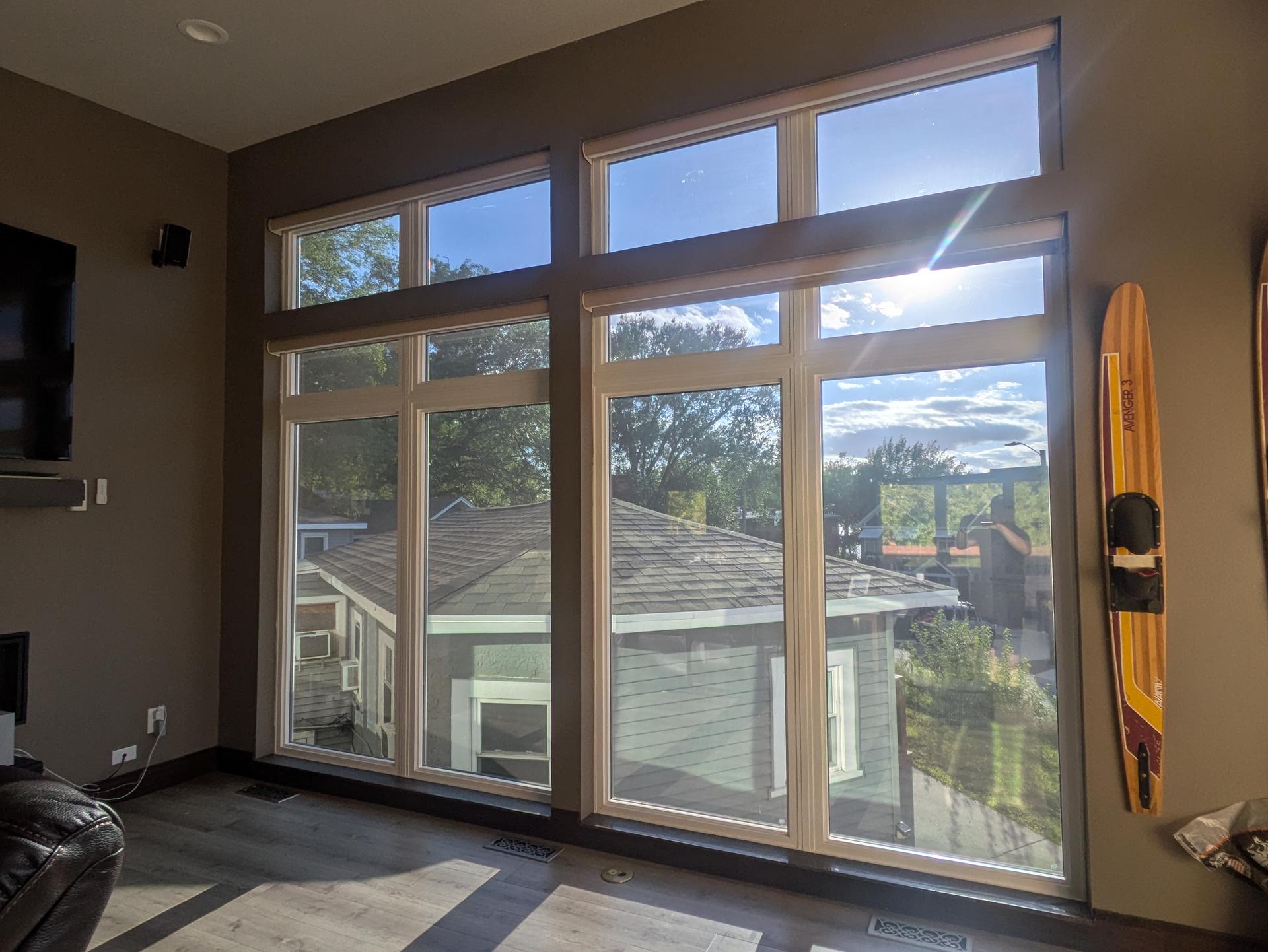
Solar film cuts heat, glare and UV and keeps your daylight. Choices run from nearly clear to dark and mirrored.
Homes and commercial buildings in Sioux City and about 100 miles around it.
START WITH THE CONCERN
Same sunlight.
Different priorities.
Heat, glare and UV exposure are separate questions. Define what matters most before choosing the film.
01 / SOLAR HEAT
Make sunny spaces more usable.
Compare suitable films that reduce solar heat entering through the glass. Match the choice to the windows, exposure and the way you use the space.
02 / VISIBLE GLARE
Give bright light a better balance.
Consider screens, seating and changing sun angles. More glare control can mean less daylight; choose the balance that fits the room.
03 / UV EXPOSURE
Reduce one contributor to fading.
Most of our solar films block more than 99% of UV. Clear glass blocks 29%. UV fades floors, furniture and artwork. Visible light and heat add to it, so film slows fading rather than stopping it.
COMPARE WITH CONFIDENCE
A clearer way
to read the numbers.
Three numbers matter most: VLT, TSER and UV. Figures are LLumar’s published numbers on single-pane clear glass. Real results vary by glass.
Appearance samples help you judge the look. Product data helps you judge performance. You need both.
Visible light
VLT / VT
How light or dark the film looks. Lower is darker. Clear glass is 90%. A 70% film is barely noticeable; 15% is dark.
Heat blocked
TSER
How much of the sun’s energy the film blocks. Higher means a cooler room. Clear glass rejects 14%.
Outside look
Exterior reflectance
How mirrored the glass looks from outside by day. Higher means more daytime privacy. Ask about HOA or landlord rules.
Inside at night
Interior reflectance
How mirrored the glass looks from inside after dark. High means you see yourself, not the view. Dual-Reflective keeps it low.
UV filtering
More than 99% on most films
Clear glass blocks 29%. UV is one cause of fading, not the only one.
THE GLASS COMES FIRST
Choose for your windows.
Consider the whole space.
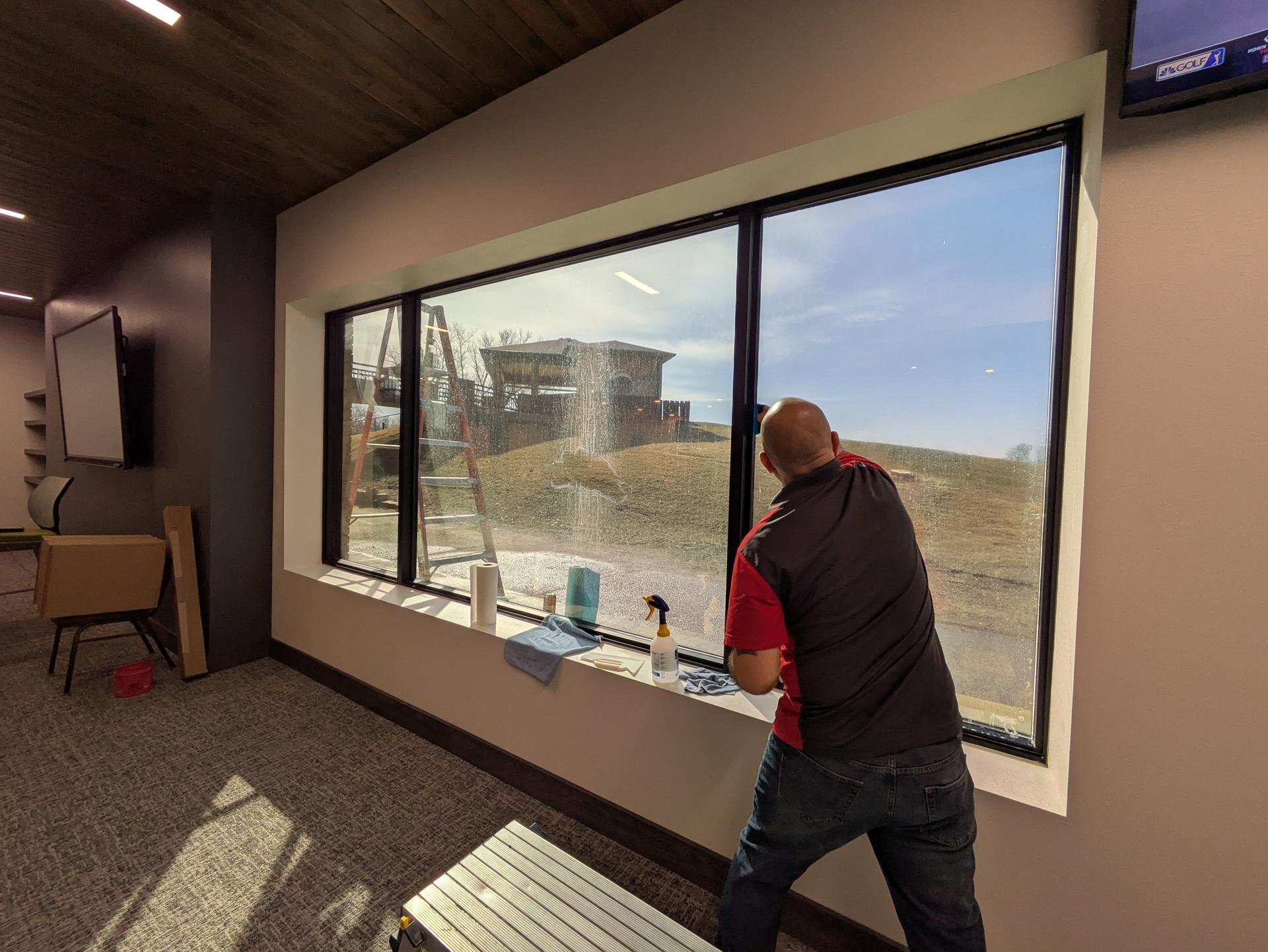
Dark films soak up heat. On the wrong glass, or a pane that is half in shade, that can crack it. We check each window and run LLumar’s film-to-glass check before we recommend a film.
Review inside and outside appearance. Ask about seasonal priorities, installation access and written warranty eligibility before deciding.
SET THE RIGHT EXPECTATIONS
Good choices start
with clear limits.
ENERGY & THE BUILDING
Plan around the building.
Film is one part of the energy picture. Heating, cooling, shading and how the space is used affect the result.
CARE FOR INTERIORS
Protect with realistic expectations.
UV, visible light and heat are different factors. Photos can’t show how much fading film prevents; we’ll explain what to expect for your windows during the visit.
PRIVACY AFTER DARK
Consider changing light.
Reflective privacy works by day only. At night, with lights on inside, people can see in. Dual-Reflective keeps your view out clear at night; frosted film gives night privacy.
YOUR SELECTION CHECKLIST
Four steps to
an informed choice.
01
Describe the space.
Share the windows, sun exposure, room use and your main concern.
02
Check the glass.
Gather glazing details, coatings, condition and any existing film.
03
Compare the options.
Review current data and appearance samples for suitable products.
04
Confirm the scope.
Agree on treated areas, price, access, care and written warranty terms.
BEFORE YOU CHOOSE
Useful questions.
Practical answers.
The right balance depends on your glass, your space and the selected product.
Can a light film reduce solar heat?
Yes. Some near-clear films cut heat and barely change the view. LLumar AIR80, for example, lets through 79% of visible light and rejects 42% of the sun’s energy. Clear glass rejects 14%. (LLumar figures, single-pane clear glass; results vary.)
Can film cut glare?
Yes. Darker and more reflective films cut the most glare. Lighter films cut less but keep more daylight. Tell us which screen or seat gets the glare and we’ll match the film to it.
Does film block the UV that fades furniture?
Yes. Most of our solar films block more than 99% of UV. Clear glass blocks 29%. Visible light and heat also cause fading, so film slows fading; it doesn’t stop it.
Does film cut the heat coming through the glass?
Yes. TSER shows how much of the sun’s energy a film blocks. Clear glass rejects 14%; LLumar’s figures for our films run up to 84%. Energy savings depend on your building and system, so we don’t promise a bill amount.
Will you check that a film is safe for my windows?
Yes. Dark films soak up heat, and on the wrong glass that can crack it. We check the glass type, size, direction and shading, and run LLumar’s film-to-glass check before we recommend a film.
Is there a film that helps in winter too?
Yes. Low-E film cuts heat loss in winter as well as heat gain in summer. Our current low-e films are LLumar LE35 and LE50 (the same films as Vista VE35 and VE50).
LET’S TALK ABOUT YOUR WINDOWS
Start with the sunlight.
Choose for the space.
Share the room, the sunlight and the view you want to keep.
YOUR NEXT STEP
Tell us where
the sun becomes a problem.
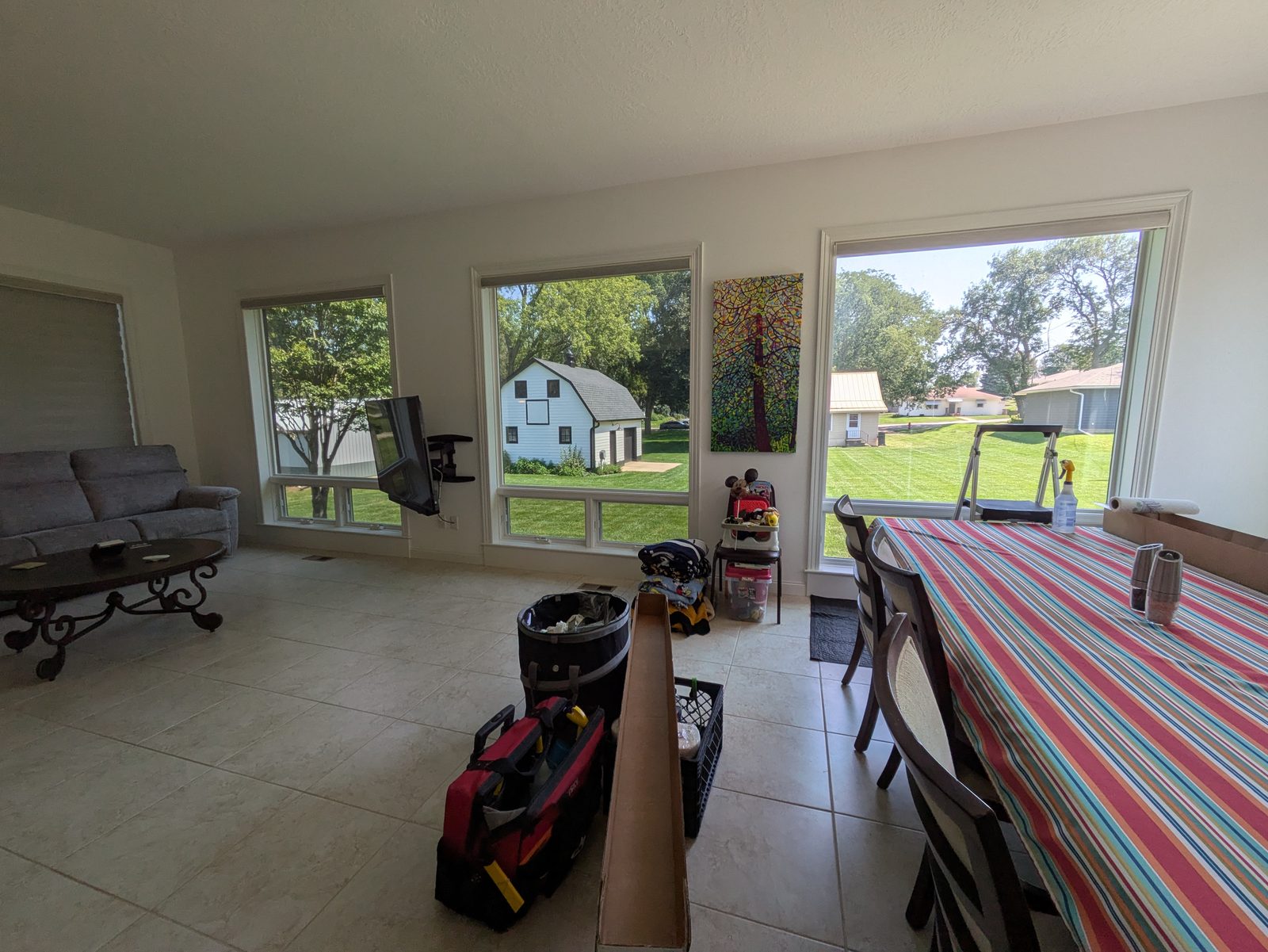
Book a free on-site estimate or call 712-277-4342. We measure, show samples on your glass and send a written estimate.